
Ugetsu (Ugetsu Monogatari) – Japan – 1953 – Drama, War, Fantasy
Directed by: Kenji Mizoguchi
Written by: Matsutarō Kawaguchi; Yoshikata Yoda
Main Players: Mitsuko Mito; Masayuki Mori; Kinuyo Tanaka; Eitarô Ozawa; Machiko Kyô
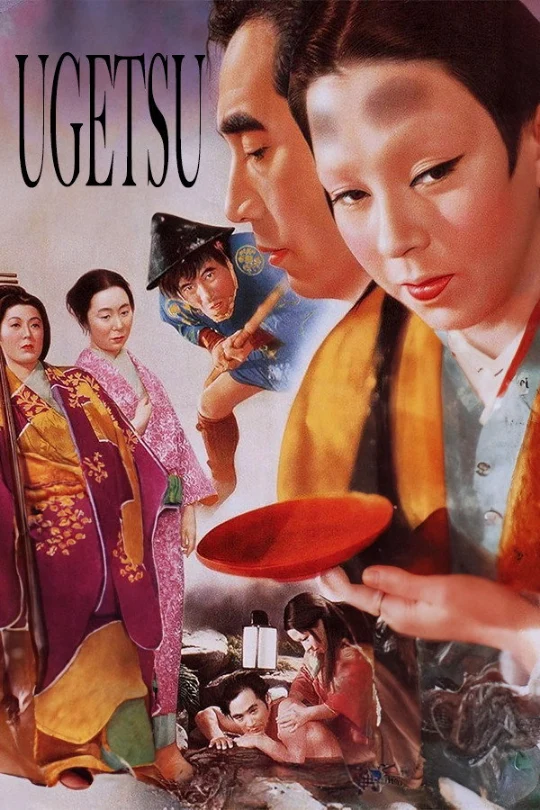
Based on a book comes a dark story of turbulence and war is beautifully shot and presented in Ugetsu, a Japanese civil war epic. It is early spring in the 16th century during a time of turmoil in the Ōmi Province. On Lake Biwa there is a small village Nakanogō, and a tiny farm where Genjurô (Mitsuko) lives with his wife Miyagi (Kinuyo) and son Genichi. Genjurô spends his time working as a potter and making fine ceramics to sell in nearby towns, like Nagahama. Also living on the land are his sister Ohama (Mitsuko) and brother-in-law Tôbei (Eitarô), who has dreams of being a samurai even if he lacks the skill.
As the land is in the strife of war, gunshots are often heard on the homestead, as commander Shibata Katsuie is facing off against another warlord, Hashiba Hideyoshi. The family worries about what lawless soldiers will do to them, but business is booming in Nagahama, so Genjurô goes to make some quick sales with Tôbei. After coming back with quite a bundle, Genjurô goes back to focusing on making more ceramics, while Tôbei’s samurai dreams have fallen quite short.
Unfortunately, the war has now come for this village, and Shibata’s troops come to round up all the men for labor. Our family flees, getting in their transport boat and leaving shore to escape the soldiers. What will the chaos of war bring next?
Ugetsu is a very interesting story as it both focuses on real historical events and unrest, while infusing it with some fantasy-type elements as the tale winds on. It has a somewhat magical atmosphere planted onto its grounded take on war and tumult, with realistic behavior blended with dreamlike desire. The results are a surreal presentation of rational morals, which is a hard feat to pull off.
The aesthetic presented is gorgeous to look at as the camera lens finds beautiful shots despite the subject matter at hand. Music, acting, cinematography, movement and emotional resonance are all used as tools to enrich the ideals of the tale. It is not a story of samurai blades and epic action, but it remains intriguing in its presentation of the chaos of struggle as well as some hints at supernatural dilemmas.
There are certainly lessons to be learned, and the viewer should have a lot to ponder from the story’s progressions by the end. It settles into a hypnotic groove and delivers a deliberate examination of human behavior with themes of love, obsession, unintended consequence, power, bloodshed, survival and mortality.
"The value of people and things truly depends on their setting."
See This If You Liked:
Throne of Blood (Kumonosu-jô); Kwaidan (Kaidan); Black Cat (Yabu no naka no Kuroneko); Onibaba; Harakiri (Seppuku); Hara-Kiri: Death of a Samurai (Ichimei); Rashomon (Rashômon)
Score:
8.0