
The House with Laughing Windows (La Casa dalle Finestre che Ridono) – Italy – 1976 – Horror, Mystery
Directed by: Pupi Avati
Written by: Pupi Avati; Antonio Avati; Gianni Cavina; Maurizio Costanzo
Main Players: Lino Capolicchio; Francesca Marciano; Gianni Cavina; Giulio Pizzirani; Bob Tonelli
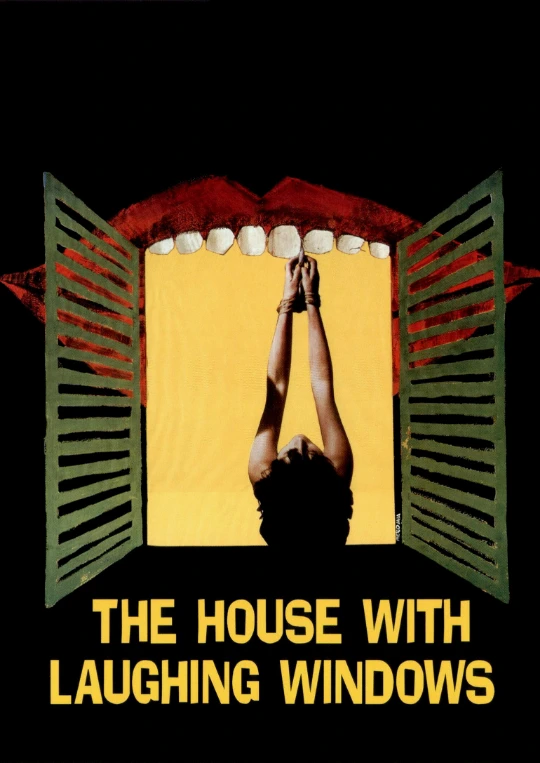
Immediately blood starts flowing as a tied-up man is stabbed and lets out cries. A knife repeatedly slices and digs into his body. A breathy and gruff voice begins speaking some very odd words. Death, colors, and purification are the themes so far. Hold on tight.
As a ferry takes Stefano (Capolicchio) to his destination of Valli de Comacchio, he looks around and notes a pretty woman traveling his way. As he arrives at shore, he is met by the local Mayor, Solmi (Tonelli) and his driver Cappola (Cavina). They all pile into a classic Mercedes Benz 180 D. As they drive, Solmi explains he is confident that Stefano will do a great job restoring a fresco, which will itself become a tourist attraction when completed.
The fresco is located in an old church which has been demolished and rebuilt several times. The painting in question is a man, Saint Sebastian, tied up and getting stabbed by multiple knives. Seems odd for a church feature, but it shows true martyrdom and the horror of death. Stefano immediately sizes it up, scraping a bit of paint off to study it.
Eventually he retires to a hotel house that he is staying at, where he gets a strange threatening call to stay away from the painting. Hmmm… Danger… Will Stefano restore the fresco, or will other forces get to him first?
As the film progresses, more characters are thrown into the mix, and the plot picks up a bit. The village is an odd place, with even stranger inhabitants. It is told with a general unease that settles into the film’s atmosphere. The small village has secrets to hide, and the history of the original fresco painter does as well.
The acting is fine, but the pacing is a touch slow. That being said, the material is decently interesting and features some creepy ideas and frightening execution at times. There are some mystery elements and some corpses to keep it all moving along. Overall, the film is not a bad horror from the 70s, and features a peek into rural Italian culture. Some viewers may find it a bit hokey however, so use this info for what it’s worth.
See This If You Liked:
Suspiria (1977); Deep Red (Profondo Rosso); Tenebre; The Beyond (…E tu Vivrai nel Terrore! L'aldilà); Don’t Look Now (1973); Midsommar; The Wicker Man (1973); Apostle (2018); Alice, Sweet Alice
Score:
7.0